
Image credit: Pexels
AI-powered automation, the Matter standard, and intelligent networking solutions are creating homes that anticipate needs, strengthen security, optimize energy use, and keep residents connected from anywhere.
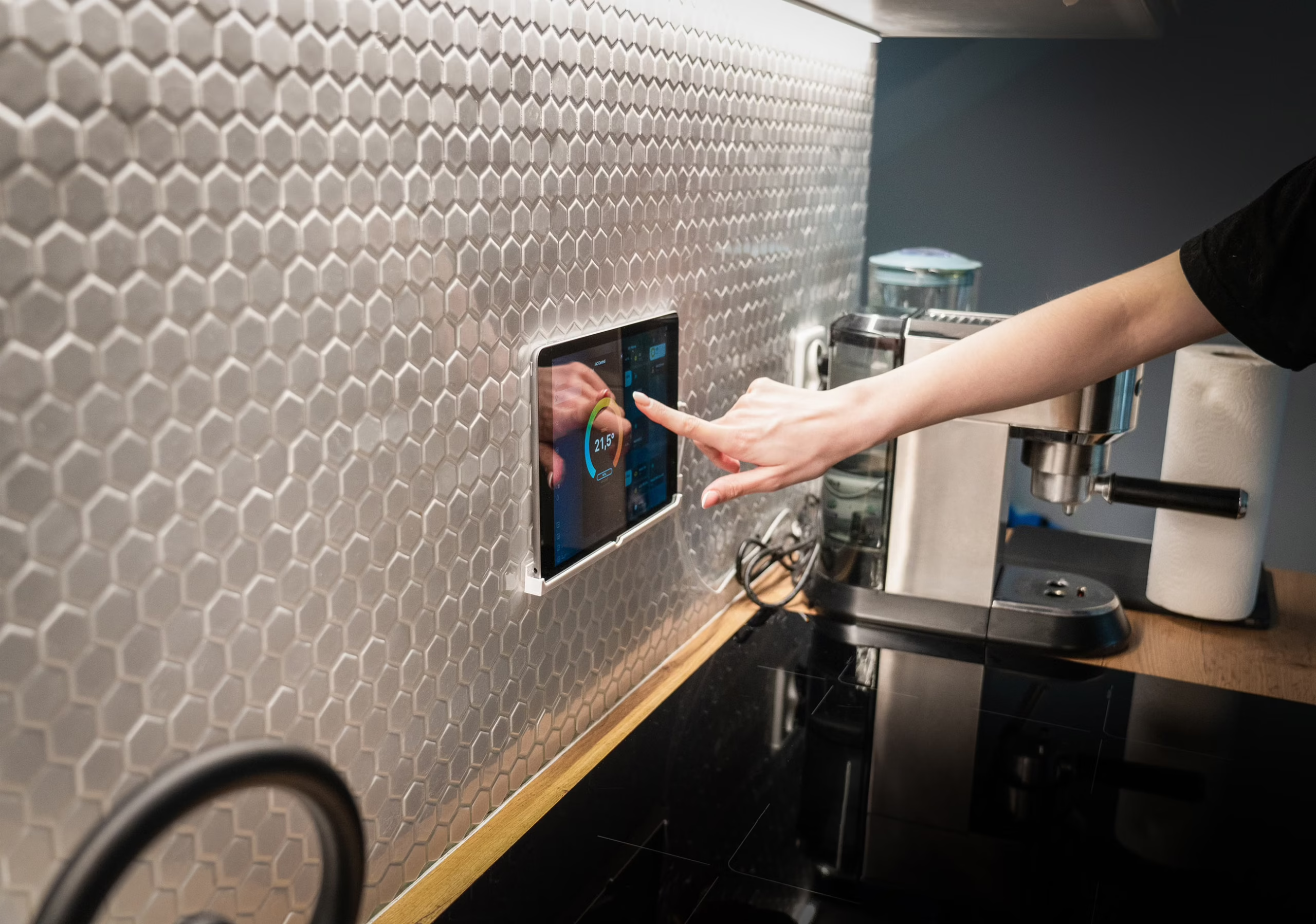
Smart homes have moved well beyond responding to simple voice commands. Artificial intelligence is now driving a new generation of adaptive living environments capable of anticipating household needs, optimizing energy consumption, enhancing security, and simplifying daily routines without requiring homeowners to master complex technology. As the technology matures, the conversation has shifted from whether connected homes can execute commands to whether they can proactively make decisions that improve convenience, efficiency, and safety.
From Reactive Automation to Proactive Intelligence
The transition from reactive automation to proactive intelligence is being powered by AI alongside interoperability standards such as Matter, which enables devices from different ecosystems to work together seamlessly. Instead of relying solely on user instructions, AI-powered systems can predict equipment failures before they happen, recommend the best times to run energy-intensive appliances, and provide personalized prompts based on a homeowner’s habits and preferences.
Mark Norman Vena, CEO and Principal Analyst at SmartTech Research, says the Matter standard is laying the foundation for smarter and more secure connected homes by establishing consistent security and certification requirements across compatible devices.
“One of the things that people don’t get about Matter is that to have a product that is Matter certified, there’s a certain level of certification and security that’s built into it, which is really, really important. So when you go out and buy a smart camera and it’s Matter compliant, that means that company had to jump through a bunch of hurdles to make sure that it has a reasonable level of security capability.”
Beyond interoperability, AI is also transforming how homes manage electricity consumption. Rather than simply automating schedules, intelligent systems continuously analyze energy usage and recommend changes that can reduce household costs while easing pressure on the broader electricity grid.
According to Vena, “AI will detect your electric usage during the course of the month, even during the course of the day, and will remind you: don’t do your dishes right now at one o’clock in the afternoon; wait till five or six o’clock when the rates come lower. You can both save money and take pressure off the grid, which is also a big advantage.”
Security remains another critical area where AI is reshaping the smart home experience. New authentication technologies are reducing dependence on traditional passwords while making connected devices easier and safer to access.
Vena explains, “There’s a thing right now called Passkey, and if you have a smart device with biometrics, it will actually use the biometrics on your smartphone to validate who you are. It makes life so simple because you don’t have to remember complex passwords. The consumer has a responsibility, frankly, to make intelligent decisions; the hackers have it too easy to hack into your home.”
Keeping Homes Connected From Anywhere
As remote work and international travel have become increasingly common, another challenge has emerged for connected households: maintaining secure access to home networks is becoming difficult. FlashedRouter, a hardware-software solution developed by founder Karl B., addresses this need with a plug-and-play device that creates an encrypted tunnel between a user’s home and wherever they happen to be, eliminating the need for advanced technical knowledge.
AI is also making these networking tools more accessible by simplifying installation and troubleshooting for users who may have previously found such technologies intimidating.
Karl B. stated, “I think AI is lowering that technical challenge. Before, you had to Google a guide or a YouTube video and follow the steps, and if one step didn’t match, the whole process failed. But with AI, people are using it to set up the solution, and it’s adaptable. If the user faces a challenge that doesn’t match the guide, the AI just gives them another solution.”
Karl B. says the product was designed to remove complexity from secure remote connectivity while allowing users to maintain uninterrupted access to their home networks.
“What I noticed is that a lot of people who leave their homes want to stay connected to them. I made it very seamless; plug your device here, and then you just connect to it from wherever you want, without needing any extra software, without needing any setup, nothing. It’s purely plug and play. Just plug it and forget about it.”
Even users with technical expertise, he notes, increasingly value solutions that eliminate uncertainty and deliver reliable performance without ongoing maintenance.
“Even people who are a little bit technical and can build this solution themselves still want to buy it because it’s bulletproof, it releases that worry or that anxiety from their head that maybe their location is going to be leaked or their employer is going to find out they’re traveling.”
A Smarter Home That Thinks Ahead
As AI capabilities continue to evolve, smart homes are becoming increasingly adaptive by anticipating needs, preventing system failures, optimizing energy use, and enabling secure connectivity wherever residents may be. With the Matter standard improving interoperability across devices and intuitive networking solutions removing technical barriers, the connected home is moving closer to its long-promised potential. The next phase of smart home technology is not simply defined by automation, but by systems designed to think ahead and respond proactively to the needs of modern households.